
Legacy, End of Life, and Unsupported Systems
Discontinued software, expired support, security vulnerabilities. When your system reaches end of life, workarounds aren’t enough. You need a proper exit plan.
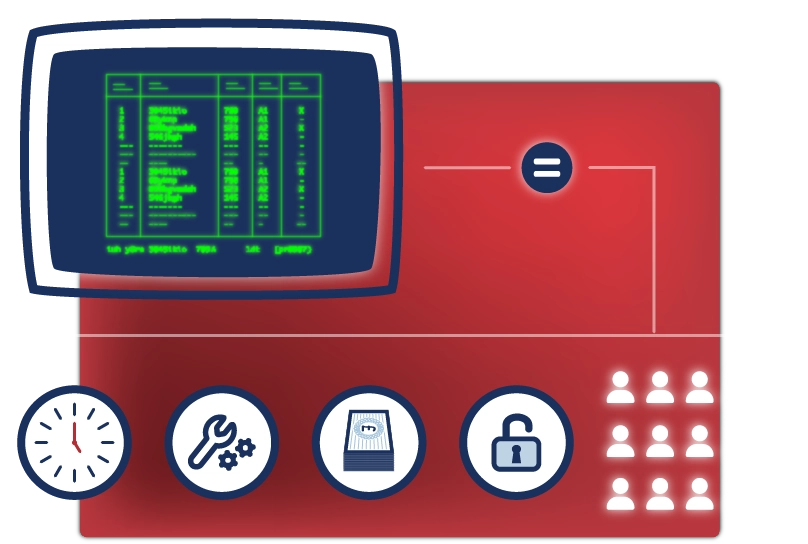
Legacy systems don’t fail all at once. They deteriorate gradually until something forces your hand. Here’s what we typically hear:
Your software vendor has announced end of life or discontinued support
Security patches and updates have stopped coming
Your server hardware is ageing and replacement parts are hard to find
IT spends more time maintaining the system than improving it
New staff struggle because nobody teaches this software anymore
Integration with modern tools is impossible or requires expensive custom work
Auditors and compliance teams are raising concerns
The people who understood the system have left or retired
Software vendors don’t abandon products without warning. But many businesses ignore the signs until it’s urgent.
End of life means no more updates. No security patches. No compatibility fixes. No support when things go wrong.
The system keeps running, but the risks accumulate. Compliance gaps. Security vulnerabilities. Integration failures.
By the time it becomes a crisis, the migration is harder and more expensive than it would have been a year earlier.
Most businesses know their legacy system is a problem. But migration feels disruptive, so the decision gets delayed. Here’s what that delay costs:
Security risk grows
Every month without patches is another month of exposure. One breach can cost more than a hundred migrations.
Compliance gaps widen
Auditors and regulators don’t accept “our system can’t do that” as an answer. The gaps become findings. Findings become problems.
Knowledge disappears
The people who understand your legacy system won’t be around forever. When they leave, you’re left with a black box.
Integration becomes impossible
Modern tools assume modern systems. Legacy platforms get left behind, cutting you off from capabilities that matter.
The migration gets harder
More years of data. More workarounds to unpick. More complexity to manage. Waiting doesn’t make it easier. It makes it worse.
We’ve migrated businesses off legacy systems many times. Discontinued products, unsupported versions, ageing on-premise platforms. Here’s our approach:
We assess the risk
We find the right solution
We protect your data
We manage the transition
A natural upgrade for Sage product users
If you’re on an older Sage product, Sage 200 offers a familiar interface with modern capabilities. Strong financial controls, robust stock management, and built for UK compliance. Available on-premise or cloud-hosted.
LEARN MORE
Cloud-native with no infrastructure to manage
Oracle’s cloud ERP eliminates the server headaches that come with legacy systems. Automatic updates, enterprise-grade security, and a platform that scales. No more end-of-life concerns.
LEARN MORE
Modern and cloud-native without the complexity
A UK-built platform that’s powerful but straightforward. Fast to implement, intuitive to use, and keeps itself updated automatically. A clean break from legacy complexity.
LEARN MORESystem migration during growth feels risky. It doesn’t have to be. Here’s what the process looks like:
How urgent is our situation?
It depends. Some legacy systems are an inconvenience. Others are a genuine risk. We’ll assess your situation and tell you honestly whether you need to move now or can plan for later.
What happens to our historical data?
We migrate it. Years of transaction history, customer records, supplier data. We work with you to decide what you need and ensure it transfers accurately.
Will the new system work like our old one?
Not exactly. Modern systems work differently. But we configure them to match your processes where possible and train your team on new ways of working where needed.
How long does migration take?
Legacy migrations typically take XX-XX weeks. More complex systems with heavy customisation take longer. We’ll give you a realistic timeline after assessment.
What if something goes wrong during migration?
We plan for it. Rollback options, parallel running where appropriate, careful testing before go-live. We’ve done this many times and know where the risks are.
What does it cost?
It depends on the source system, destination platform, data complexity, and customisation needs. We’re upfront about costs after assessment. No surprises.
If your system is approaching end of life or already past it, let’s have an honest conversation about your options. We’ll assess your situation and help you plan a migration that makes sense for your business.
Prefer to talk now? Call our specialists directly:
01355 581 960