The Future of Finance at Hampden: Making AI Work for Your Finance Team

Nathan Ive
October 29, 2026
Practical takeaways, real audience questions and a guide to help Scottish finance leaders take their next step with AI.
Where can AI make a meaningful difference in finance, and how do you get started with confidence?
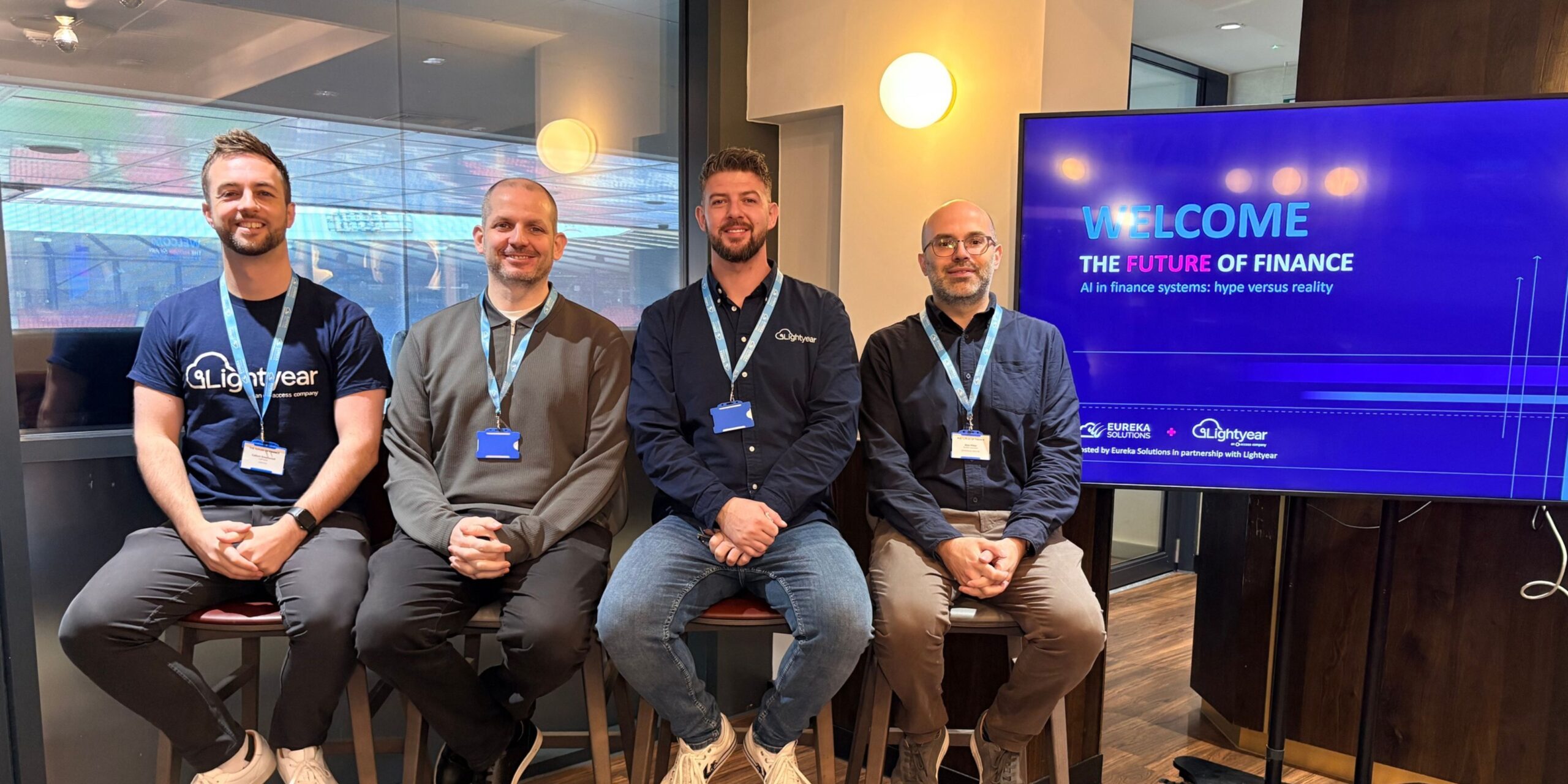
That was the question behind The Future of Finance, hosted by Eureka Solutions and Lightyear at Hampden Park, Glasgow, on 21st October 2026. Bringing together Scotland’s finance community, the event explored how AI, automation and connected systems can reduce manual work and create more time for analysis and decision-making.
We’ve brought the key themes together in our free guide, Make AI Work for Your Finance Team, alongside practical examples, questions submitted by attendees and a framework for planning your first pilot.
From AI ambition to a useful first step
The discussions at Hampden highlighted a challenge many finance teams recognise: there is plenty of interest in AI, but less certainty about where to begin, which tools to trust and how to measure the benefit.
Graham Dyer from AAB explored the importance of judgement, evidence and context. Eureka’s Alan Miles connected the conversation to the finance systems businesses already use, while Kenny Galloway from Lightyear examined the opportunities across the invoice journey.
A clear theme emerged: start with a recurring problem, understand the information it depends on and decide what a worthwhile improvement would look like.
Our audience’s AI readiness responses reinforced that need. 15 of 23 respondents were not yet measuring AI’s value, while average data readiness stood at 2.5 out of 5. These findings reflect our event audience and the questions shaping their next steps.
What you’ll find in the guide
Whether you’re exploring AI or already testing it, the guide will help you:
- Find a practical starting point across reporting, forecasting and invoice processing.
- Understand where AI, automation and integration fit within your finance workflows.
- Build confidence in the results through approved data, clear permissions and human review.
- Bring your team into the process, including conversations about changing responsibilities.
- Plan and measure a pilot, accounting for review time, corrections and running costs.
You’ll also find Scottish customer examples and answers to the questions attendees raised about accuracy, security, connected systems and return on investment.
Ready to turn the discussion into something useful for your team?

Common
Questions
Where should a finance team start with AI?
Start with one recurring task that has reliable source information, a clear reviewer and a measurable outcome. The guide includes examples and a pilot brief to help you choose.
Does our finance system need to change before we can use AI?
That depends on your current systems and the task. Your next step could involve existing functionality, better integration or improved data quality. The guide explains how to assess the options.
How can we tell whether AI is delivering value?
Measure the completed task, including preparation, checking, corrections and costs. A faster first draft is useful when it improves the overall process.
Can I read the guide if I didn’t attend?
Yes. It’s designed to be useful independently, with practical takeaways and audience questions you can discuss with your own team.
