Mandatory E-Invoicing is Coming: Why UK Businesses Need to Act Now

Jack Loudon
August 19, 2026
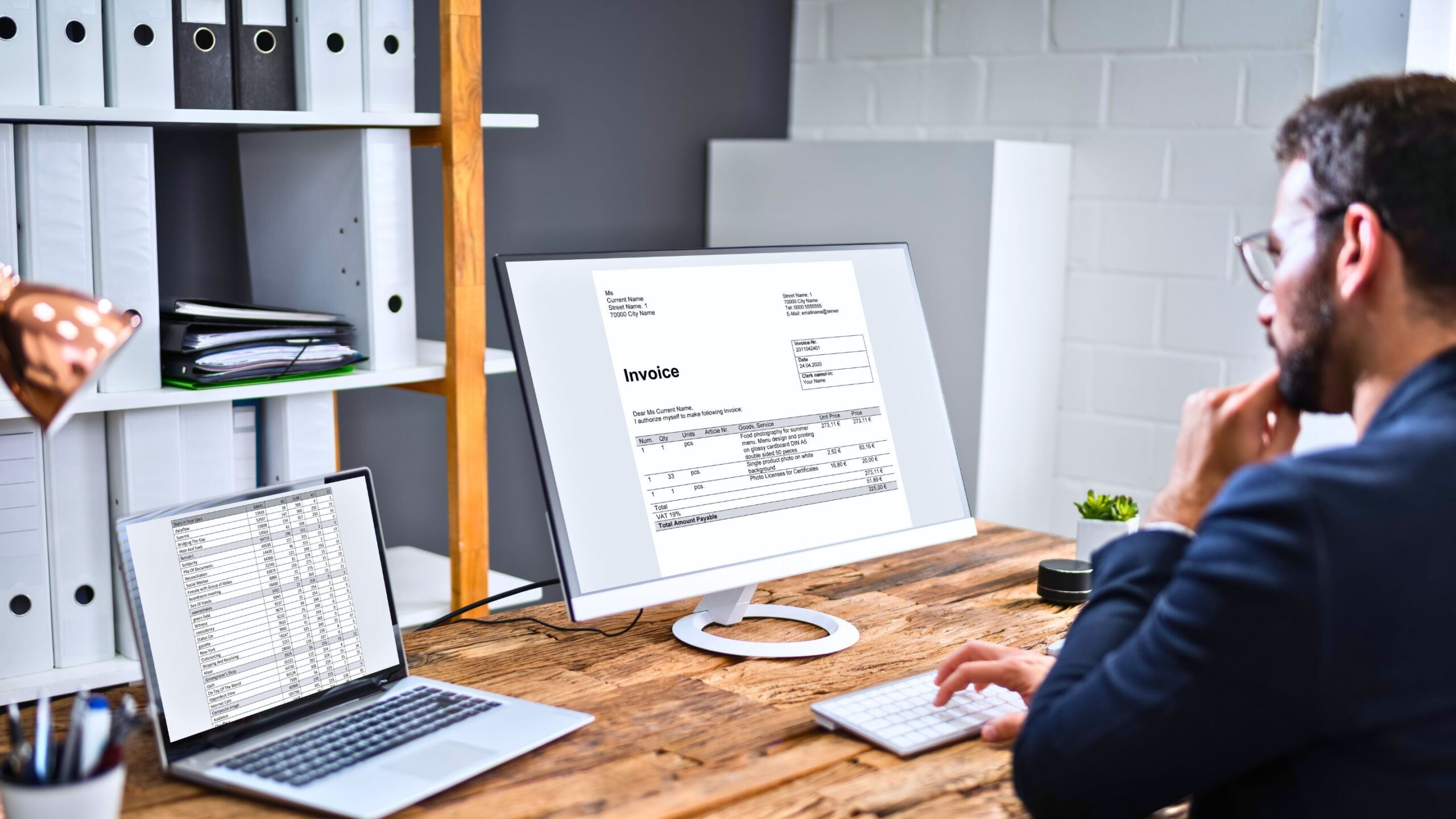
E-invoicing is rapidly changing how businesses create, send, receive and process invoices.
Across Europe, governments are introducing mandatory electronic invoicing and digital tax-reporting requirements. The UK Government has also confirmed plans to make e-invoicing mandatory for VAT invoices. For finance teams, this is not simply a change from paper invoices to PDFs. It represents a fundamental shift in how invoice data moves between businesses, finance systems and tax authorities.
UK businesses with international operations may already be affected by requirements in other countries. Even organisations operating mainly within the UK should start assessing their systems, data and processes now. The businesses that prepare early will have more time to make considered decisions. Those that wait may find themselves dealing with a finance-critical compliance project under increasing time pressure.
What is e-invoicing
Electronic invoicing is the direct exchange of structured invoice data between the systems used by suppliers and buyers.
A PDF attached to an email may be a digital invoice, but it is not necessarily an e-invoice. A structured e-invoice is created in a format such as XML or JSON, allowing the receiving system to read and process the information automatically. Depending on the country, the invoice may also need to pass through an approved network, certified provider or government platform before it reaches the customer.
This removes much of the manual work traditionally associated with invoicing. Finance teams no longer need to download documents, copy information between systems or manually correct common data-entry errors. HMRC describes e-invoicing as the digital exchange of invoice information directly between buyers’ and suppliers’ financial systems, even when those businesses use different software.
Why is e-invoicing becoming urgent for UK businesses?
The transition is already happening.
Several European countries have introduced mandatory e-invoicing, while others are moving through phased implementation programmes. Each country can set its own requirements, formats, platforms and reporting processes.
A UK business may therefore be affected sooner than expected if it has European subsidiaries, overseas VAT registrations or established operations in a country where a mandate is already active.
Businesses may also encounter e-invoicing through their customers and suppliers. A major European customer may require invoices to be submitted through a particular network, while overseas suppliers may begin sending structured invoices that existing finance processes cannot handle efficiently.
The UK is moving in the same direction. The Government has confirmed that mandatory e-invoicing will form part of the future VAT regime and is working with businesses, software providers and industry representatives on the detailed implementation roadmap.
This gives UK organisations an opportunity to prepare, but it should not be mistaken for a reason to delay. Understanding the impact can take time, particularly for businesses with multiple entities, complex tax arrangements or different finance processes across several countries.
The European e-invoicing challenge
The European Union’s VAT in the Digital Age programme, known as ViDA, is creating a wider framework for electronic invoicing and digital VAT reporting.
However, individual countries are not waiting for one common European deadline. National e-invoicing programmes are already being introduced across the continent. The challenge for international businesses is that there is no single process that works everywhere. Some countries use central clearance models where invoices must pass through a government platform. Others use decentralised networks such as Peppol or require businesses to work with approved service providers. The required invoice data can also differ. A format accepted in one country may not meet the legal or technical requirements of another.
For a UK business operating across several European markets, this can mean managing multiple formats, networks, platforms and reporting obligations from the same finance system.
Source: European Commission: VAT in the Digital Age
Which European countries are introducing e-invoicing?
The move towards mandatory e-invoicing is already well underway across Europe. While the requirements vary by country, several major markets have either introduced mandates or are currently moving through phased implementation.
Italy. Italy was one of the first European countries to introduce widespread mandatory B2B e-invoicing. Invoices are exchanged through the government’s central Sistema di Interscambio platform, commonly known as SdI.
Romania. Romania has introduced mandatory electronic invoicing through its national RO e-Factura platform. Businesses operating in Romania need to ensure invoices can be created, submitted and received through the required government system.
Belgium. Belgium made structured e-invoicing mandatory for most domestic B2B transactions between VAT-registered businesses from January 2026. The Belgian model uses the Peppol network, requiring businesses to exchange structured invoices rather than relying on PDFs.
Poland. Poland is introducing mandatory B2B e-invoicing through its central KSeF platform in phases during 2026. Businesses with a registered office or fixed establishment in Poland may need to create and receive invoices through this national system.
Germany. Germany has already begun its phased transition. Businesses operating in Germany must be able to receive structured e-invoices, with requirements for issuing them being introduced gradually.
France. France begins its phased implementation in September 2026. All businesses established in France will need to be capable of receiving electronic invoices, while the requirement to issue them will be introduced according to business size. Invoices will need to pass through a government-approved platform.
Other countries, including Croatia, Greece, Spain, Slovakia, Ireland, Norway and the Netherlands, are also introducing or developing electronic invoicing and digital reporting requirements.
For UK businesses, the key question is not simply whether they sell to customers in Europe. The impact will depend on where the business has legal entities, fixed establishments or VAT registrations, as well as the type of transaction involved.
Any organisation with a European footprint should identify the countries relevant to its operations and confirm the current requirements in each market. The rules continue to evolve, so this assessment should be reviewed regularly rather than treated as a one-off exercise.
Which UK businesses should act first?
The immediate priority is for UK businesses with an international footprint.
This includes organisations with subsidiaries, legal entities or VAT registrations in Europe, as well as businesses managing invoicing for overseas operations from a central UK finance team. Multi-country organisations face the greatest challenge because they may need to meet several requirements while maintaining consistent group-wide processes and reporting. Businesses planning European expansion should also consider e-invoicing during the planning stage. Entering a new country without understanding its invoicing requirements could lead to unexpected implementation work, costs and delays.
However, e-invoicing is not only relevant to large international organisations. UK-based businesses should also consider whether their current invoicing processes are ready for structured electronic data. If invoice creation still depends on PDFs, spreadsheets, manual checks or rekeying information between systems, preparing for e-invoicing could require a wider review of the finance process.
Why e-invoicing is a systems and data issue
The success of e-invoicing depends heavily on the quality of the data held within the finance system. Structured invoices may require accurate customer details, VAT registration numbers, legal entity information, tax codes, addresses, payment terms and product or service classifications. When this information is incomplete or inconsistent, an invoice may fail validation, require manual correction or be rejected by the receiving platform. This is why e-invoicing should not be treated as a standalone finance or tax project. It can affect accounts payable, accounts receivable, tax, IT, operations and customer service.
Organisations should also review how invoices move through the business. If different subsidiaries use separate templates, approval routes or third-party portals, those processes may need to be standardised or connected. The technology is only one part of the project. The underlying data, ownership and workflows need to be ready too.
The business benefits extend beyond compliance
Regulation may be driving the current urgency, but e-invoicing can also improve how finance teams operate.
Structured invoice data reduces the need for manual entry and creates more opportunities for automation. Invoices can be validated, processed and reconciled more consistently, helping finance teams reduce errors and resolve exceptions more quickly. Better invoice visibility can also support cash-flow management. When businesses know whether an invoice has been received, accepted or rejected, they can address problems before they result in delayed payment. For accounts payable teams, structured supplier invoices can reduce processing time and improve the quality of information entering the finance system. E-invoicing can therefore support wider goals around finance transformation, process standardisation and more accurate reporting.
What should businesses do?
Businesses should begin by mapping where they operate, where they are VAT-registered and how invoices are currently exchanged in each country.
The next step is to review the information held in the finance system. Customer, supplier, subsidiary and tax records should be complete, accurate and consistently maintained. Finance and IT teams should then assess whether their existing NetSuite setup can create, send and receive the structured documents required by each relevant market. This review should also consider the wider process. Who will monitor failed invoices? How will exceptions be corrected? Which team owns the underlying data? How will new requirements be tested before they become business-critical?
Starting this work now gives organisations time to identify gaps, understand potential costs and build a realistic implementation plan.
Do not wait for e-invoicing to become a deadline problem
E-invoicing is already affecting businesses across Europe, and mandatory requirements are moving closer for the UK.
For businesses with international operations, the risk may already exist. For UK-focused organisations, the direction of travel is now clear. Waiting until a customer, supplier or regulator requires a particular invoice format could create disruption across billing, cash flow and financial operations. Eureka Solutions can help businesses review their current NetSuite environment, understand how invoices move through the organisation and identify the technology, data and process changes that may be required.
The first step is understanding your current position.
*E-invoicing and tax requirements vary by country and may change. Businesses should confirm their specific legal and tax obligations with an appropriate professional adviser.
