AI in NetSuite: The Adoption Gap No One’s Talking About

Alan Miles
July 27, 2026
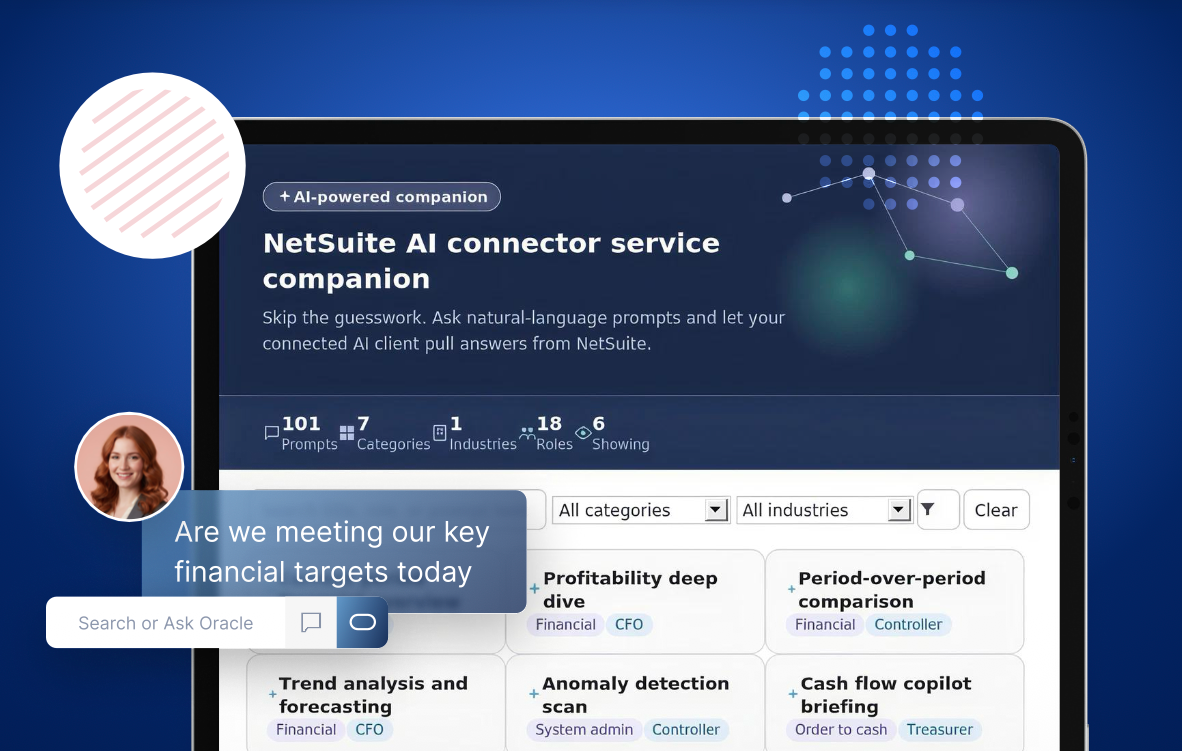
Here’s something that doesn’t get said enough: most businesses that already have AI features switched on in their ERP aren’t using them.
Not because the features don’t work. Because nobody’s decided who’s allowed to use them, on what data, or with what oversight. That’s not a technology problem. It’s a governance one
The gap between AI hype and ERP reality
AI has been a buzzword in ERP circles for a couple of years, but according to Alan Miles, Commercial Director at Eureka Solutions, the real acceleration only started in the last six months. NetSuite and iplicit have moved from roadmap slides to shipping actual features: anomaly detection, exception flagging, and forecasting tools that are either live now or landing later this year.
The pace is the problem. Vendors are releasing capability faster than most finance teams can evaluate, authorise, and roll it out responsibly.
AI doesn’t know the difference between your data and your mistakes
AI embedded in your ERP doesn’t audit your numbers against reality – it works with whatever you’ve given it. If your chart of accounts has years of inconsistent coding, or three departments define “revenue” three different ways, the AI won’t flag that as a problem. It’ll treat it as fact and build its answers on top of it.
That’s the part that catches businesses out. A forecasting feature is only as good as the data feeding it, and most companies haven’t done the unglamorous work of getting that data clean and consistent first.
Why the features are there but unused
Miles puts it plainly: it’s not that businesses lack access to the tools, it’s that they’re still working out their internal AI policy – who’s authorised, which tools are sanctioned, and what data those tools should be allowed to touch. Until that’s settled, most teams hold back rather than risk it.
That caution is reasonable. The mistake is treating it as a reason to delay indefinitely rather than a checklist to work through.
Embedded beats external – but only with the right permissions
Older AI tools like Claude or ChatGPT had to learn your business from scratch, one conversation at a time. NetSuite’s approach is different: its AI connectors plug directly into your live data and inherit each user’s existing permissions. Ask a natural-language question and you only see what you’re already cleared to see.
That’s a meaningfully lower-risk setup than handing every employee an open connection to a general-purpose chatbot. But it still assumes your permissions structure is correct – which brings us back to governance, not technology.
What to do before flipping the switch
Eureka’s own recommendation, echoed by other ERP providers in their group: don’t issue AI access to everyone at once. Instead:
- Run a small pilot first, using AI itself to scan your existing data for gaps, duplicates, and inconsistencies
- Fix what it finds before extending access further
- Roll out to wider teams in phases, with clear rules on what each role can ask and act on
- Keep a human checkpoint on anything the AI produces – it can still fill gaps with plausible-sounding guesses when it can’t find a real answer
This turns AI adoption from a leap of faith into a controlled rollout.
The next 12–18 months: from novelty to habit
Expect the pace of new releases to level off slightly, giving finance teams room to catch up. The bigger shift will be AI handling more of the routine work with a human reviewing the output, rather than a human doing the work with AI as a sidekick. Less bespoke development, more configuration through natural language. Less “will AI replace people,” more “people plus AI, moving faster.”
The businesses that benefit first won’t be the ones with the newest AI features. They’ll be the ones who did the governance work – clean data, clear permissions, defined policy – before they turned the features on.
Ready to find out if your data and permissions are AI-ready? Book a free ERP strategy call with Eureka Solutions and we’ll walk through what’s actually usable in your system today, versus what needs groundwork first.
